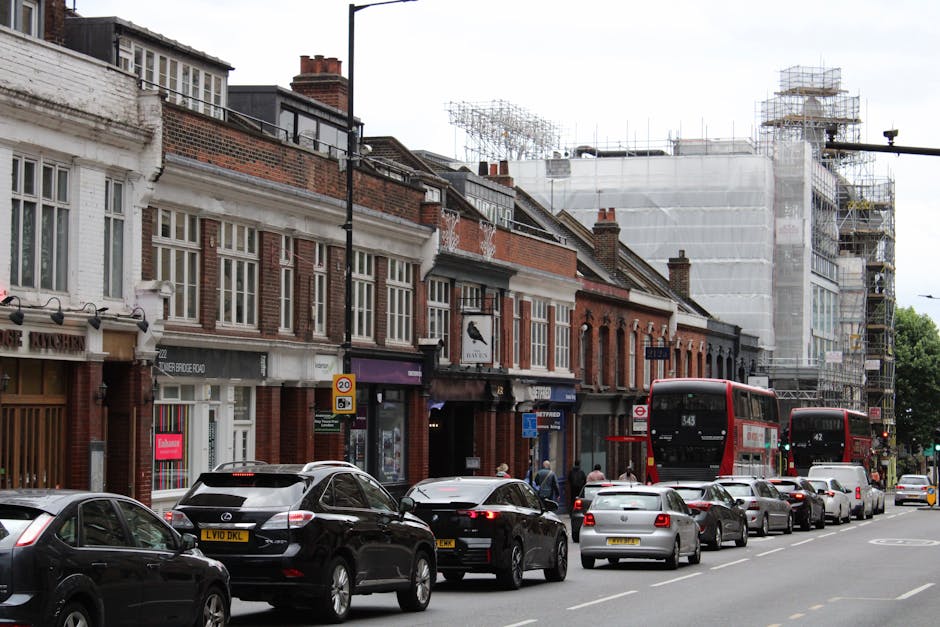
Putney High Street Removals Guide for Tight Access Moves
If you are moving on or around Putney High Street, you already know the main challenge is rarely the packing itself. It is the access. Tight pavements, awkward stairwells, busy traffic, limited stopping space, narrow entrances, and flats above shops can turn a simple move into a bit of a puzzle. This Putney High Street removals guide for tight access moves is designed to help you plan properly, avoid the usual headaches, and make the day feel a lot less frantic.
Whether you are leaving a compact flat, moving into a high-street apartment, or shifting furniture through a building with awkward internal corners, the right preparation matters. Small decisions made a few days earlier can save a great deal of lifting, waiting, and general stress on moving day. Truth be told, that is where most smooth moves are won.
Why Putney High Street removals guide for tight access moves Matters
Tight access removals are not just "regular removals, but slower". They need different planning from the start. On a street like Putney High Street, the issue is often not one big obstacle but a stack of little ones: you may have a short loading window, no easy place to leave a van, shared entrances, basement steps, or a lift that is technically there but far too small for anything useful.
That matters because removals work best when the route from van to room is predictable. If the team cannot park near the entrance, every box becomes a longer carry. If the hallway is narrow, bulky furniture may need extra protection or partial dismantling. If timing is off, you may end up waiting while traffic clears or someone finishes using the lift. None of this is dramatic on its own, but together it can add pressure very quickly.
For many moves, especially flats and small homes, the smartest fix is not forcing everything through one difficult day. It is building a plan that allows for staged loading, smaller loads, storage, and careful packing. If you are comparing service options, a broader removals and storage approach can be far more forgiving than trying to do everything in one rush.
Expert summary: Tight-access moves are won by planning the route, reducing bulky items, and choosing the right vehicle and timing. If the access looks awkward to you, it will almost certainly look awkward on moving day too.
How Putney High Street removals guide for tight access moves Works
A good tight-access move starts with understanding the property, not the van. Before anything else, work out how items leave the building and where they will sit temporarily. That means checking the width of stairs and doorways, whether there is a lift, how close the vehicle can stop, and whether there are any shared spaces that might become bottlenecks.
Once that is clear, the move is usually broken into sensible stages. Smaller items are packed first. Large furniture is measured, wrapped, and, where possible, dismantled into safer pieces. The vehicle is chosen to fit the street and the load rather than simply being the biggest available. On a busy London road, that can make all the difference. A smaller van parked neatly in a sensible spot is often more effective than a huge one that blocks everyone and still cannot get near the door.
In practice, tight-access removals often use a mix of methods. You might see a man and van setup for lighter loads, or a more structured local removals service when there is a larger inventory but the property still has awkward access. For flats and upper-floor homes, a dedicated flat removals approach can be much more realistic than a one-size-fits-all house move.
Sometimes the move includes a temporary storage decision as well, especially when access is tight and the timing between properties is not perfect. In those cases, short-term or secure storage can reduce pressure massively. Not glamorous, but very effective. Sometimes boring is exactly what you want.
Key Benefits and Practical Advantages
There is a real upside to planning a move properly for tight access. The obvious benefit is fewer delays, but the less obvious one is control. When the route, packing, and loading order are already thought through, the day feels calmer. You make better decisions. The crew is not guessing. The risk of damaged walls, scratched furniture, or frustrated neighbours drops significantly.
- Less lifting distance: If the vehicle can stop closer, every item travels fewer metres.
- Lower damage risk: Fewer awkward turns and fewer rushed carry-outs mean fewer scuffs and knocks.
- Better time management: A realistic plan helps prevent the move from overrunning.
- More flexible loading: Smaller loads can be moved in the right order, which helps with fragile items.
- Reduced stress: When people know the plan, they stop improvising. That alone is worth a lot.
There is also a commercial advantage if you are comparing providers. A team that is used to working in busy, compact London streets will usually ask better questions during the quote stage. They will want to know about parking, access times, stairs, lift dimensions, and whether items need to be held in storage. That tells you something useful: they are thinking about the move as a process, not just as a price tag.
If packing is likely to be a bottleneck, it can help to bring in packing services or at least use a more structured approach to wrapping and labelling. For fragile households, furniture protection and careful dismantling often save more time than they cost. A little effort upfront, and the whole day behaves better.
Who This Is For and When It Makes Sense
This guide is for anyone whose move involves awkward access, but it is especially relevant if you live above shops, in a converted building, in a basement flat, or on a section of Putney High Street where stopping right outside the door is not guaranteed. It also applies if the items are not huge but the route is difficult, because awkward access can turn even a modest job into a fiddly one.
You will find this most useful if you are:
- moving from a flat with narrow stairs or a small lift;
- handling a student or one-bedroom move with multiple trips;
- moving a business from a tight retail or office frontage;
- transporting heavy furniture through shared corridors;
- trying to move out between lease dates and need temporary storage;
- wanting a compact, efficient move rather than a full-size household operation.
For students or short-term renters, the balance often leans toward student storage or short-term storage if move-out and move-in dates do not line up neatly. For owners of sofas, wardrobes, or dining sets that simply will not behave in a narrow stairwell, furniture storage can be the calm choice rather than the heroic one.
If the move is only a few items, or a very compact flat, small removals may be a better fit than a larger, more expensive setup. And for households with a mix of bulky and boxable items, house removals can still work well, provided the access plan is clear from the start.
Step-by-Step Guidance
Here is the part that really helps: do the job in order, not in panic. A tidy sequence makes a tight-access move much easier to handle.
- Measure the access points. Check door widths, stair turns, bannisters, lift dimensions, and any awkward corners. If a sofa barely fits through your own living room doorway, it will not magically become slimmer at the staircase.
- Assess parking and loading options. Know where the vehicle can stop, how long it can stay there, and whether the route from van to entrance is safe and practical.
- List the large items first. Sofas, wardrobes, beds, desks, and fridges should be identified early because they shape the rest of the move.
- Decide what should be dismantled. A bed frame or table that comes apart neatly usually moves faster and safer than one left intact.
- Pack by priority, not by room alone. The first items off the van should be the ones you need quickly. Essentials, chargers, bedding, toiletries. All the boring bits that become very important by 9 p.m.
- Protect the route inside the property. Floor coverings, door-frame padding, and corner protection reduce damage in cramped spaces.
- Plan the loading order. Heavy and stable items should go in first, with lighter and fragile items placed where they will not get crushed.
- Keep a backup option. If the main property is not ready, storage can prevent a messy handover. The useful thing is not pretending the timing is perfect when it clearly is not.
A realistic move often includes one or two compromises. Perhaps the piano stool moves separately. Perhaps the wardrobe doors come off. Perhaps the team works in smaller hand-carry runs rather than trying to shove one oversized item through a narrow gap. That is normal. In fact, it is usually the sensible choice.
If the access is especially tight, it may be worth combining a move with mobile self storage, where items can be loaded and held in a more controlled way before the final delivery. For some properties, that is much easier than racing the clock with one overloaded van.
Expert Tips for Better Results
Experienced movers tend to focus on small things that save time later. It sounds almost too simple, but it works.
- Photograph the access route in advance. A quick set of pictures of the hallway, stairs, entry points, and outside loading area helps everyone understand what they are dealing with.
- Use consistent labels. Put room names and "priority" markers on boxes so essential items are easy to find.
- Do not overfill boxes. Heavy boxes are miserable on stairs and more likely to split. Nobody enjoys a cardboard box giving up halfway up a narrow landing.
- Leave a clear path. Shoes, coats, recycling, and loose bits of furniture can slow everything down. Clear routes matter more than people realise.
- Think about noise and neighbours. Putney High Street is busy enough already. A polite heads-up can help if there will be repeated trips, lift use, or early loading.
- Choose the right storage length. If you need breathing room, secure storage or long-term storage can be matched to your timeline rather than forcing the move into a fixed pattern.
A small but important tip: keep a "do not load last" pile separate from everything else. It sounds obvious. Then moving day arrives, and somehow the kettle is wrapped in a blanket while the box of keys is still under the bed. Happens all the time.
Common Mistakes to Avoid
The most common mistake is underestimating access. People focus on the volume of stuff and forget the shape of the route. But a narrow corner can be more of a problem than three extra boxes.
Another one is leaving dismantling too late. If a wardrobe needs to come apart, it should be done before the team arrives at the entrance, not while everyone is standing in the hallway trying not to trip over screws. Similar story with parking: if stopping arrangements are vague, the first part of the day can disappear in waiting and apologising. Not ideal.
- Assuming a large van is automatically better than a smaller one.
- Forgetting to measure sofas, beds, and fridge-freezers against stair turns.
- Not checking lift size, booking rules, or access hours for flats and managed buildings.
- Packing fragile items in rushed, overstuffed boxes.
- Leaving storage decisions until the last minute.
- Failing to tell the removals team about awkward gates, low ceilings, or basement steps.
The best way to avoid these problems is to be slightly over-prepared. Not obsessed. Just calmly prepared. There is a difference.
Tools, Resources and Recommendations
You do not need a van full of specialist gear for every move, but a few simple tools make tight access work far better:
- Measuring tape: Essential for doorways, furniture, and stair turns.
- Furniture covers and blankets: Useful for preventing scuffs on corners and polished surfaces.
- Basic tool kit: Helpful for beds, shelving, tables, and other dismantling jobs.
- Strong boxes and tape: Better boxes reduce collapses on stairs and in lifts.
- Labels and marker pens: Small thing, big payoff.
- Floor protection: Important in shared blocks, older properties, or freshly decorated homes.
It is also worth thinking about what should not be carried at the same time as everything else. Documents, valuables, and essential daily items are often better kept separate. If you are moving a small business or working from home, document storage and business storage can keep important files and stock organised while the physical move is underway.
For work setups, office removals and office storage are worth considering if desks, chairs, archives, or equipment need a cleaner transition. That is especially useful when a tight entrance or shared building access would make a large one-day move awkward.
Law, Compliance, Standards, or Best Practice
For a local removal, the main compliance concerns usually relate to safety, transport, access arrangements, and reasonable care for people and property. The practical side matters more than grand statements. Vehicles should be loaded safely, walkways should remain as clear as possible, and anyone involved should avoid lifting in a way that creates unnecessary risk.
In the UK, moving companies are generally expected to work in line with standard health and safety practice, appropriate insurance arrangements, and honest communication about limitations. That means saying when an item is too large for a space, when access is restricted, or when extra handling time is likely. In a tight-access setting, the honest answer is nearly always better than the optimistic one.
It is also sensible to check policies on payments, cancellations, and responsibilities before the move. If you are comparing providers, pages such as insurance and safety, health and safety policy, payment and security, and terms and conditions can help you understand how the company handles risk, payment, and service expectations. That kind of transparency is reassuring for good reason.
If sustainability matters to you, especially during a move that produces a lot of packing waste, it is sensible to look at recycling and sustainability arrangements too. Boxes, wrapping, and unwanted furniture can often be handled more responsibly when there is a plan rather than a post-move pile in the corner.
Options, Methods, or Comparison Table
Choosing the right approach depends on the size of the load, the quality of access, and how much flexibility you need on timing. Here is a simple comparison that may help.
| Option | Best for | Pros | Trade-offs |
|---|---|---|---|
| Man and van | Small loads, short distances, flexible scheduling | Simple, efficient, often ideal for compact access | Less suitable for larger household moves |
| Flat removals | Upper-floor apartments, narrow stairs, shared entrances | Designed around awkward access and careful handling | May need extra time if access is especially restricted |
| House removals | Full household moves with more furniture | Broader support for larger inventories | Can be overkill for a small high-street flat |
| Removals and storage | Moves with a date gap or uncertain access timing | Reduces pressure and supports phased moving | Requires an extra planning step |
| Small removals | Few items, student moves, partial clear-outs | Cost-conscious and practical | Not ideal for large furniture volumes |
There is no single "best" method for every Putney High Street move. The right choice is the one that fits the building, the furniture, and the time window. That sounds a bit plain, but it saves people money and headaches.
Case Study or Real-World Example
Picture a typical move: a one-bedroom flat above a busy high-street unit, with stairs that turn sharply at the first landing and no practical parking directly outside. The resident has a sofa, bed frame, desk, two wardrobes, several boxes of books, and the usual odds and ends that somehow multiply in the last week.
Rather than trying to move everything in one oversized load, the job is split into stages. The bed is dismantled in advance. The wardrobe doors are removed. Boxes are packed in manageable weights, not overfilled. Essentials are kept separate. The van is booked with the access issue in mind, and the most awkward items are loaded first while the corridor is clear.
The result is not glamorous, but it works. The furniture gets out without unnecessary damage, the move finishes on time, and the resident avoids the classic "where on earth is the coffee?" problem at the end of the day. If the keys to the new place are not quite ready, a short stop in self storage buys breathing room and keeps the move from turning messy.
That is the thing about tight access moves: success is usually quiet. No drama. No big story. Just a clean handover and a van that leaves on time.
Practical Checklist
Use this checklist a few days before moving day. It will save you from a lot of last-minute scrabbling around.
- Measure doorways, stair widths, lift size, and any awkward corners.
- Confirm where the vehicle can park or stop safely.
- List large furniture and decide what needs dismantling.
- Pack fragile items separately and label them clearly.
- Set aside essentials for the first 24 hours.
- Protect floors, bannisters, and tight internal routes.
- Tell the removals team about basement steps, shared entrances, or loading restrictions.
- Decide whether temporary storage is needed.
- Keep valuables and important documents with you.
- Check the final terms, payment details, and insurance cover before the day arrives.
If you are moving into a smaller space, or simply do not want to unpack everything immediately, a mix of household storage and short-term storage can make the transition much more comfortable. For more delicate or oversized items, secure storage gives an added layer of reassurance while you settle in.
Conclusion
A tight-access move on Putney High Street does not need to become a stressful event. Once you understand the access points, plan the loading route, and choose the right support, the whole thing becomes far more manageable. A bit of measurement, a bit of common sense, and a willingness to use storage or smaller loads where needed can transform the experience.
The key is to treat access as the main project, not an afterthought. If you do that, the rest usually falls into place. Maybe not perfectly. But well enough that you can breathe again by the end of the day, which is the real goal, isn't it?
Get a free quote today and see how much you can save.
And if you are still weighing up what makes the most sense, start with the access, not the boxes. That one decision can save you a great deal of hassle, and honestly, a calmer move is worth its weight in tea bags.
Frequently Asked Questions
What counts as a tight-access move on Putney High Street?
Usually, it means any move where parking, loading, stair access, door width, lift size, or internal layout makes the job harder than a standard front-door removal. Flats above shops, basement homes, and properties with narrow corridors are common examples.
Should I choose a man and van or a full removals service?
If you have only a few items or a very compact move, a man and van setup can be ideal. If you have more furniture, awkward stairs, or a larger household to clear, a fuller removals service is usually more practical.
How far in advance should I plan a tight-access move?
The earlier the better, especially if parking or building access needs careful coordination. A few days can be enough for very small moves, but a week or two gives you more room to measure, dismantle, and sort storage if required.
What if my sofa or wardrobe will not fit through the stairwell?
Measure it properly before moving day and consider dismantling it. If it still looks awkward, it may be better to use storage or replace the item than force it through and risk damage. That is not defeat; it is common sense.
Can storage help with tight-access removals?
Yes. Storage is often the smartest answer when timing is tight or the new property is not quite ready. Options such as long-term storage or shorter-term arrangements can make a complicated move far easier to manage.
How do I reduce damage in narrow hallways and stairs?
Use protective covers, keep routes clear, and avoid overfilling boxes. It also helps to move the bulkiest pieces first while everyone is fresh and the access route is still clear.
Do I need to measure everything?
Not every lamp and side table, no. But you should measure all the big items, especially sofas, beds, wardrobes, fridge-freezers, desks, and anything with an awkward shape. A quick measurement can prevent a very long morning.
What is the best way to pack for a cramped move?
Pack by weight and priority. Keep boxes manageable, label them clearly, and separate essentials from non-essentials. If you want help with the wrapping and box prep, packing services can reduce a lot of stress.
Are small removals suitable for flats on Putney High Street?
Often yes. If you are moving from a studio, one-bedroom flat, or just a limited number of items, small removals can be a very efficient choice, especially where access is tight.
What should I ask before booking a removals company?
Ask how they handle access restrictions, whether they have experience with flats and narrow stairwells, what insurance and safety arrangements are in place, and how they manage storage if the move cannot be completed in one go.
Is it worth using storage even for a short move?
Yes, sometimes. If keys are delayed, rooms are not ready, or the access is awkward enough that a staged move would be less stressful, short-term storage can save time and reduce pressure immediately.
How do I keep the move calm on a busy road?
Keep your plan simple, allow buffer time, and make sure the removals team knows the exact access points. A calm move is usually a well-briefed move. Not perfect, just prepared.